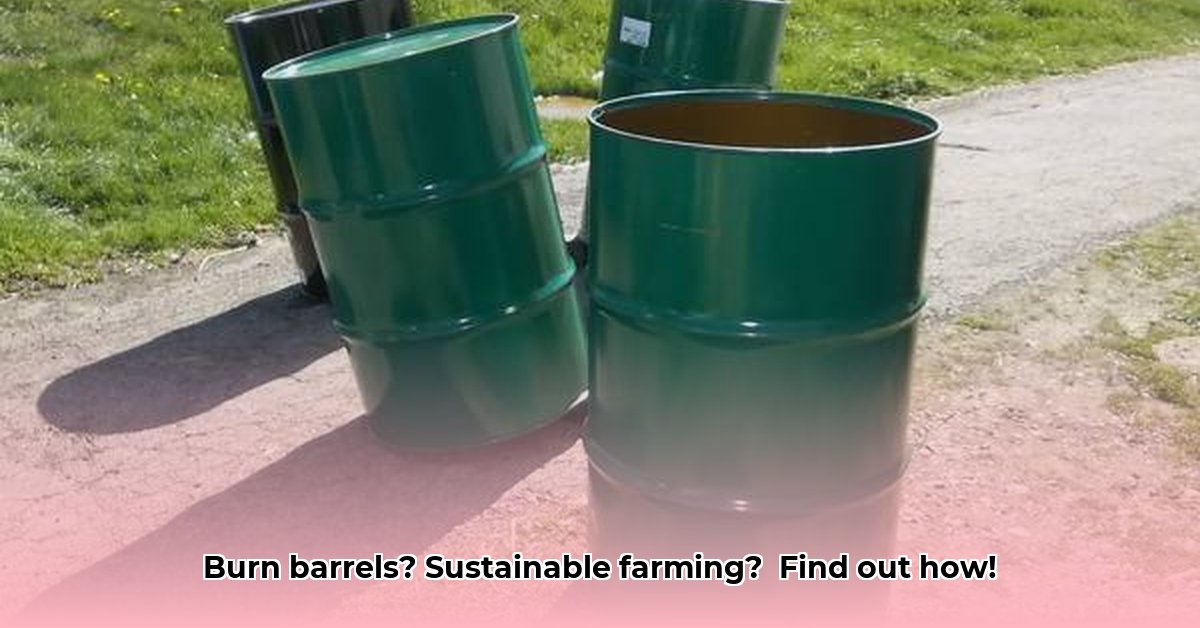
Sustainable Alternatives to 55-Gallon Drums in Agriculture
The ubiquitous 55-gallon drum, a staple on many farms, often serves as a versatile storage solution for chemicals, fertilizers, water, and harvested crops. However, the long-term environmental consequences of relying on these drums warrant a closer examination. This article explores the environmental impact of 55-gallon drums and presents practical, sustainable alternatives for agricultural storage. Are the short-term conveniences of these drums outweighing the long-term environmental costs? Let's delve into the details. For more on responsible agricultural practices, check out this helpful resource: weekly farm ads.
The Environmental Impact of 55-Gallon Drums
While undeniably convenient and cost-effective, 55-gallon drums present several environmental challenges. The manufacturing process itself consumes significant resources, and the potential for leaks and spills contaminates soil and water. Furthermore, the disposal of these drums, especially those containing hazardous materials, poses a significant waste management problem. How many end up improperly disposed of, leaching harmful chemicals into our ecosystems? Consider the significant energy used to manufacture and transport them; these are not insignificant factors in overall sustainability.
Dr. Emily Carter, Professor of Chemical and Biomolecular Engineering at Princeton University, notes that, “The life cycle assessment of these drums often reveals a surprisingly high carbon footprint, especially when considering transportation and potential for leakage during their use.”
Sustainable Storage Solutions: Beyond the Barrel
Fortunately, sustainable options exist that minimize the environmental impact associated with traditional 55-gallon drums. These greener alternatives offer comparable functionality without the considerable environmental drawbacks.
Durable, Reusable Bins: Investing in robust plastic bins or similar containers made from recycled materials offers a long-term cost-effective solution. These are washable, reusable, and avoid the rust and leaks associated with metal drums. Adapting food-grade containers from other industries is also a viable possibility for some agricultural applications. The reduced waste and decreased need for replacements translate into cost savings over time.
High-Quality Bulk Containers: Utilizing bulk containers with superior seals for storing large quantities of chemicals and fertilizers significantly minimizes the risk of environmental contamination through spills or leaks. This protects valuable soil and water resources and demonstrates a commitment to responsible stewardship.
Bio-based Plastics: While still under development, bio-based plastics represent a promising area of innovation. These materials, derived from renewable resources, decrease dependence on fossil fuels. The field is rapidly evolving, with more biodegradable and compostable storage options becoming increasingly available in the near future. While currently more expensive upfront, the long-term environmental benefits are significant.
Improved Recycling Infrastructure: Advocating for stronger recycling programs for metal and plastic drums is critical. Improved collection, processing, and responsible reuse initiatives are crucial to mitigating the environmental impact of these containers. Our collective action can drive positive change in this area.
A Practical Guide to Transitioning to Sustainable Storage
Switching to more sustainable alternatives doesn't require an immediate, expensive overhaul. A phased approach proves to be both efficient and cost-effective.
Inventory and Assessment: Begin by assessing your current drum usage, the materials stored, and the frequency of use. This provides a clear picture of the scale of the transition.
Research and Comparison: Investigate available sustainable alternatives, considering costs, durability, ease of cleaning, and environmental impact. Consult with other farmers for real-world experiences and insights.
Pilot Program and Testing: Start with a smaller-scale trial of a new container type for a specific purpose, allowing for real-world testing and evaluation before committing to a full-scale change.
Gradual Replacement: As old drums become worn or unusable, progressively replace them with sustainable alternatives, minimizing disruption to your workflow and budget.
Monitoring and Refinement: Continuously monitor the costs and environmental impact of the transition to refine your strategies and address any unforeseen challenges.
Weighing the Pros and Cons: A Direct Comparison
| Feature | Traditional 55-Gallon Drums | Sustainable Alternatives |
|---|---|---|
| Upfront Cost | Low | Higher initial cost, lower long-term costs |
| Availability | High | May require more effort to source |
| Environmental Impact | High (manufacturing, leaks, disposal) | Significantly lower |
| Durability | Variable; susceptible to rust and damage | Generally more robust and long-lasting |
| Maintenance | Difficult to clean thoroughly | Easier maintenance |
A Sustainable Future for Agriculture
Embracing sustainable farming practices isn't merely a trend; it's a necessity for the long-term health of both our farms and our planet. Transitioning to environmentally responsible storage solutions represents a significant step toward a more sustainable agricultural future. By taking these practical steps, we can collectively contribute to a healthier environment and a more resilient agricultural sector.
Reducing the Environmental Impact of 55-Gallon Drums: Key Takeaways
Repurposing: Extend the lifespan of drums through creative reuse (rainwater harvesting, feed storage). This directly reduces the demand for new plastic.
Recycling: Properly recycle HDPE (High-Density Polyethylene) drums marked with a "2" inside the recycling symbol. However, local recycling infrastructure may impose limitations.
Sustainable Alternatives: Prioritize purchasing durable, reusable containers from recycled materials or biodegradable options. Higher upfront costs are offset by long-term environmental and economic benefits.
Community Collaboration: Participate in cooperative recycling programs to share resources and promote environmentally sound waste management practices.
Advocacy: Support initiatives that promote effective and efficient plastic handling and recycling systems.